

Las Lajas Sanctuary, Nariño: the temple that floats between sky and earth

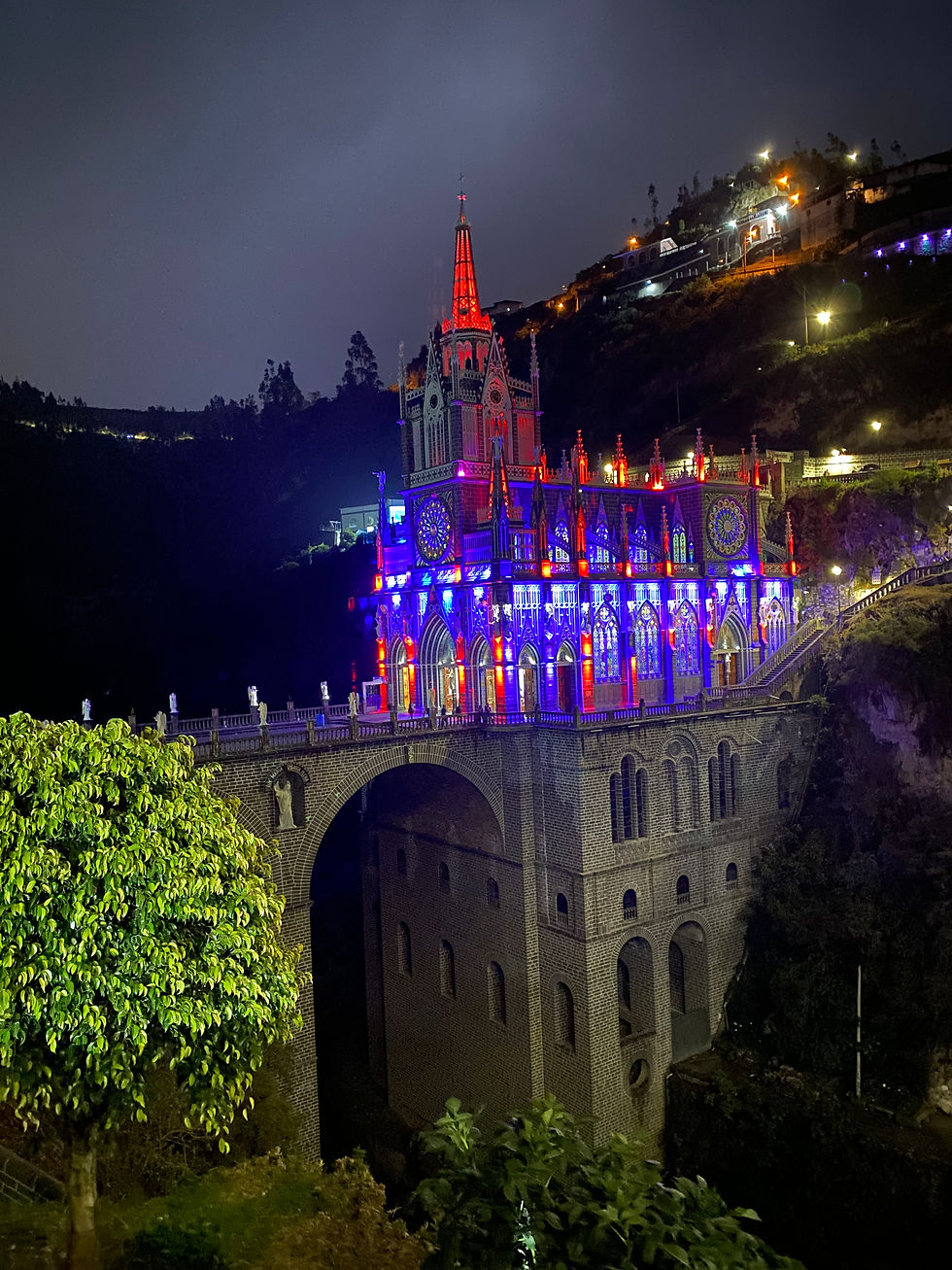
In southern Colombia, very close to the Ecuadorian border, the Las Lajas Sanctuary, located in Ipiales (Nariño), stands as a marvel of Neo-Gothic architecture and popular spirituality.
“One of the most beautiful temples in the world”
Built over the canyon of the Guáitara River, it is one of Colombia’s most significant pilgrimage destinations, as well as a visual gem deemed “one of the most beautiful temples in the world.”
But settling for this label alone doesn't do justice to what it truly represents.
Beyond overused superlatives and superficial comparisons, Las Lajas creates a magical, healing, and creative experience.
Something that was always there long before architect Lucindo Espinosa designed its slender Neo-Gothic profile above the legendary Guáitara canyon.
As he himself wrote:
“If you’re looking for the monument, look around you.”
And indeed, the real monument is nature,this sacred site where an architectural fantasy was built that rivals European Gothic cathedrals.
Declared a National Monument, the sanctuary captivates with its beauty and the stories surrounding it,from its indigenous origins to the miraculous apparition of the Virgin of the Rosary in the 18th century.
“Between those rocks arises a basilica that seems to hang from the heavens…and its walls sprout like roots from the cliff itself.”
—Lucindo Espinosa, 1876
Religious syncretism as a unique feature
Las Lajas is poetry in stone, in water. In shades of green, brown, and blue. A sanctuary where stones sing as the river prays.
When visiting, it helps to understand the place through its history.
At first glance, you admire a spectacular Catholic temple,but dig deeper, and you uncover the true essence of Las Lajas and its fascinating past.
It is an extraordinary example of syncretism, born from colonization and the Catholic Church’s overlay on sacred pre-Columbian Indigenous sites.
A sacred site since Pre-Columbian times
Long before the Marian apparition in 1754, the Guáitara River canyon was a sacred place for Indigenous groups like the Pastos, Quillacingas, and Awás.
These groups revered natural elements tied to the spirit of the earth(Pachamama) especially, ravines and caves used in rituals for purification, healing, and gratitude.
The springwater from the cave where the Catholic church was built was used for ancestral medicine.
Nearby, the pictograms of Potosí,prehistoric rock art featuring geometric, human, and animal forms,speak to a worldview that embraced the landscape as a threshold between the earthly and the divine. These artifacts are on display in the sanctuary’s museum.
Today, you can feel these ancient echoes if you pause in silence and connect with this magnificent natural space.
The Virgin of the Rosary’s Apparition and Rosa’s Miracle
The story of Las Lajas Sanctuary began in 1754.
According to tradition, a local Indigenous woman named María Mueses de Quiñones was crossing the canyon with her daughter Rosa, who was born deaf and mute.
Caught in a storm, they took refuge among the lajas (the flat rocks that give the sanctuary its name).
It was then that the miraculous happened: Rosa spoke clearly, saying that “the lady calls me.”
The lady was the Virgin of the Rosary,and this event transformed the site into a destination for Marian pilgrimage.
The Miracle engraved in stone
Days later, an image of the Virgin and Child, flanked by Saint Dominic and Saint Francis of Assisi, appeared on the rock,without paint or carving.
Pigments were found not on the surface, but several millimeters inside the rock,like a fresco created without a brush.
This phenomenon deepened the devotion of the faithful and curious travelers who have come seeking solace, miracles, and faith ever since.
From Indigenous chapel to the present Neo-Gothic temple
Following the apparition, locals built a humble thatched chapel.
By 1795, a brick sanctuary had been erected, later replaced in the 19th century with a sturdier structure.
Father José María Perón spearheaded the effort, supported by donations from the faithful and contributions from architects in Ecuador and Colombia,opting to preserve the original grotto as part of the temple rather than enclosing it completely with stone or marble.
Between 1916 and 1949, architects Lucindo Espinosa and Gualberto Pérez completed what we see today: a majestic Neo-Gothic basilica made with regional grey stone, suspended on a 20-meter bridge connecting both sides of the canyon.
The Potosí quarry: the stone behind the miracle
A few kilometers from the temple, in the Frontales ravine in Potosí, lies the old quarry that provided the stone for which the place is named.
Ruins of a hanging bridge once used by the workers,who paid tribute to the Virgin in a small niche,still stand.
Though nearly forgotten, this site remains essential to the story and to Las Lajas’ grounding in the land.
Perfect for visitors seeking a quieter, more authentic experience around the sanctuary.
Visiting the Las Lajas Sanctuary
Location: Las Lajas, Ipiales (Nariño), just 10 km from the Ecuadorian border and a 2-hour drive from Pasto (which has an airport).
Setting: built over the Guáitara River canyon in the dramatic Morro ravine, with the structure appearing to emerge from the mountain and spanning the canyon with a stone-arched bridge.
How to get there:
From Pasto (Colombia): 85 km (approx. 1.5 hours by car or bus).
From Tulcán (Ecuador): 20 km (about 30 minutes), via Rumichaca land border.
From Ipiales: frequent buses or taxis available (15 minutes).
Services:
Free entry.
Accessible by trails or cable car (approx. 3,000 COP).
Open daily, including public holidays.
Hotels and restaurants available in the nearby village.
Other Attractions:
The Village of Las Lajas: a charming settlement with an old church, craft shops, local sweets, religious souvenirs, scenic viewpoints, a weekend market featuring Andean cuisine (like cuy, aged empanadas, or potato locro), and pilgrim-oriented lodging.
Natural Surroundings: views from the bridge of the “Miracle Waterfall,” with bird songs, mist, and rushing water creating a magical realm, best enjoyed before the visitor crowds arrive.
Museum, Crypt, and Ex‑Votos: includes the Museum of Miracles, an underground crypt with stained glass, tunnels, canyon views, devotion galleries, and a religious art museum featuring liturgical objects, relics, architectural models, photographs, exhibit on indigenous cultures, and a reflection of the sanctuary’s evolution.
Trails and Pilgrimage Paths:
Via Crucis path with religious stations and canyon views.
Excursions to the Frontales quarry.
Path to the San Miguel hilltop image and lookout (established in 1928).
Pre-Hispanic Potosí pictograms, best visited with a guide.
Ecological route along the Guáitara River from the sanctuary base.
Pilgrimage Routes:
From Ipiales: pilgrims often walk the approximately 10 km route as an act of penitence or gratitude. This pilgrimage is typically done in September or during Holy Week.
From Pasto (about 80 km): Some devotees undertake this multi-day walk from the capital of Nariño each year as a tradition.
From Ecuador: Especially from Tulcán and Quito, there are regional pilgrimage routes.
Practical tips for your visit
Best time to visit: at sunrise, when the sanctuary is bathed in golden light and fewer tourists are around. At sunset, you can enjoy its magical nighttime illumination.
Clothing: bring a jacket or poncho,it’s often cold and rainy.
Footwear: comfortable, non-slip shoes are recommended for walking along paths, stairs, and slopes.
Photography: there are several scenic viewpoints perfect for panoramic shots.
Recommended stay: at least half a day, but staying overnight will let you enjoy the surroundings in peace.
Avoid public holidays: if you’re seeking a more tranquil experience. Be patient with photo queues,everyone wants the perfect picture.
If you are driving your own vehicle,try to arrive early to find parking more easily .
A transformative experience beyond faith
Las Lajas Sanctuary is more than a site of devotion,it is a symbol of spiritual resilience, a bridge between cultures, and a place that leaves a deep impression.
Whether you are a believer or not, its powerful energy and natural splendor will move you profoundly.
Come with an open heart and let yourself be touched by the magic of this temple suspended between the sky and the earth.
If this place has touched your soul as it did ours, we invite you to continue exploring the other magical corners of Nariño,a department rich in history, nature, and spirituality.
By Eva Puente


Comentarios